
Kant
Sketch
Archive

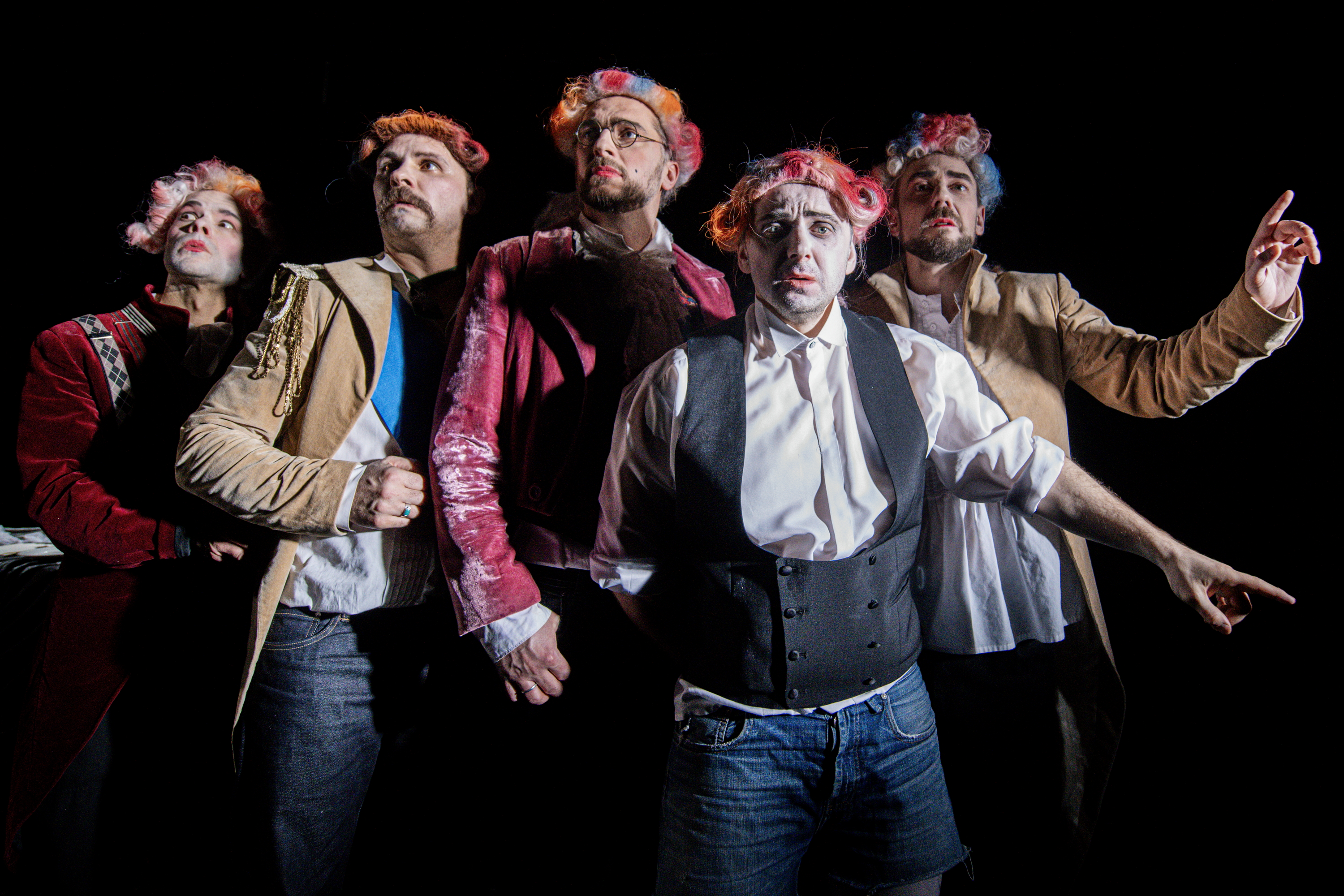
A sketch
Marius Ivaškevičiaus
Directed by Oskaras Koršunovas
Duration – 1 hr 30 mins
First sketch showing – 21st February, 2024
2024 marks the 300th anniversary of the birth of Immanuel Kant (1724-1804), the founder of German classical philosophy. On the occasion of this anniversary, the Small Theatre of Vilnius, together with director Oskaras Koršunovas, invites viewers to a sketch-reading of the play "Kant" by playwright Marius Ivaškevičius, in which a large group of actors beloved by the audience participate.
According to playwright M. Ivaškevičius, the play "Kant" is, in a sense, a dismemberment of a person into fragments and an attempt to put them back together. Namely, the inner man or the interior of a person, what makes up our consciousness and even the subconscious or soul, if such a thing exists at all. And after dismembering, an attempt is made to see how that being (man) interacts with the environment around him. Is he needed by this planet at all, or is it worth replacing him with something else?
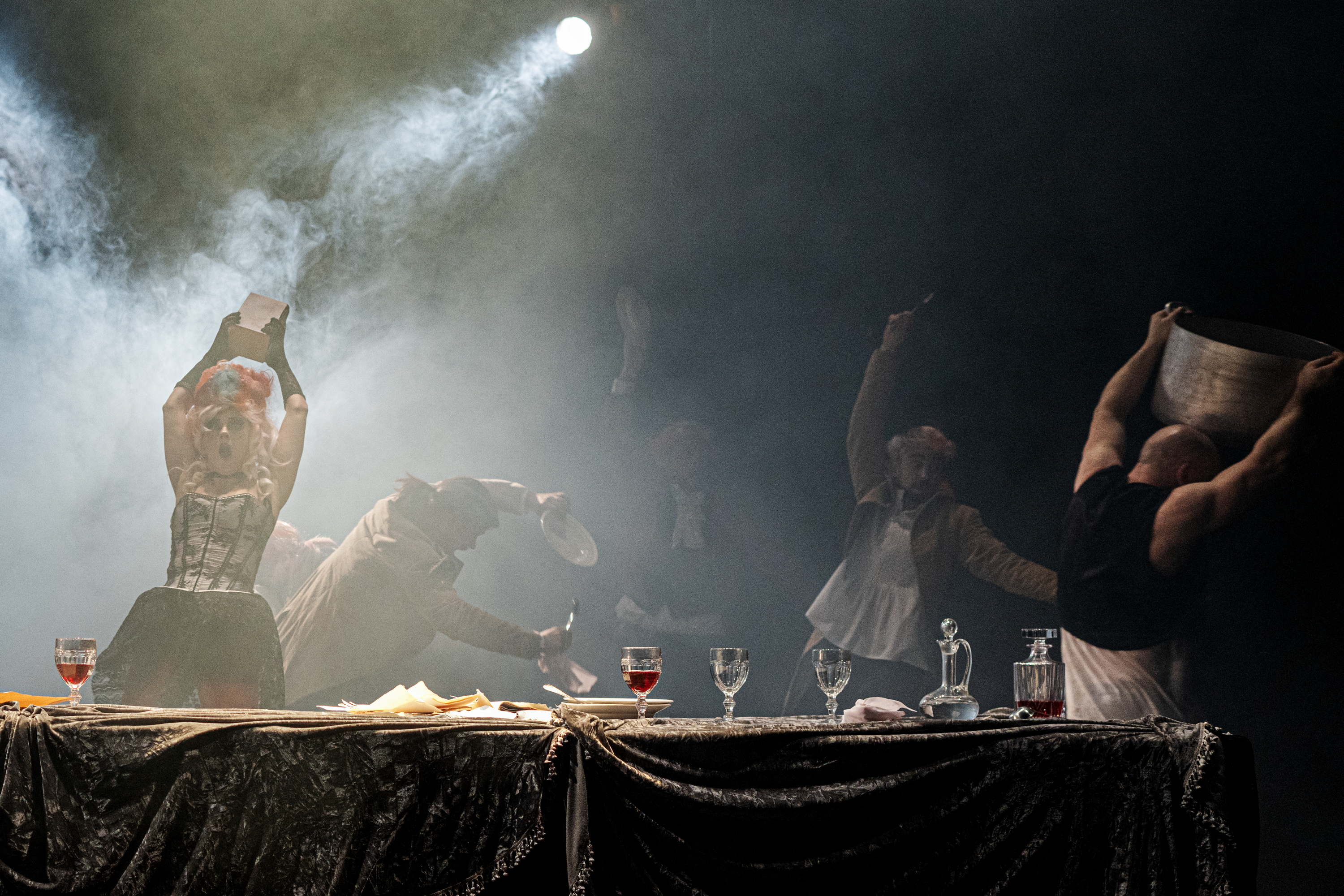
The action of the work takes place at the very end of the 18th century, and at the same time it is the end of an entire era. Soon the French Revolution will break out, irrevocably changing this slow, restrained world of wigs and artificial moles hiding the signs of syphilis on the face. The heroes of the play subconsciously feel not only the approach of the end, but also the beginning of something new: this is very similar to today's world—the feeling that we live on the threshold of eras, when something new and unknown to us will soon be born. The heroes of "Kant", just like us, are experiencing disastrous climate changes, about which they know nothing, although they feel their mystical consequences—a volcano erupts in Iceland and ash falls across Northern Europe, poisoning agricultural production. People die, but it is not clear from what. And this is the moment when a person, who feels like the ruler of the universe, is brought down to earth and his insignificance before the forces of nature is shown.


 D. Matvejev nuotr.
D.Matvejev nuotr.
D.Matvejev nuotr.
D.Matvejev nuotr.
D.Matvejev nuotr.
D.Matvejev nuotr.
D. Matvejev nuotr.
D.Matvejev nuotr.
D.Matvejev nuotr.
D.Matvejev nuotr.
D.Matvejev nuotr.
D.Matvejev nuotr.
I came up with the idea in 2009, when I accidentally met the legendary Lithuanian theater director Eimuntas Nekrošius at the airport, he was holding a book by Immanuel Kant in his hands. He asked me if I could write a play based on I. Kant’s work “Critique of Pure Reason”, and he would immediately start producing it. Only later did I realize that he had reached a stage in his profession when he wanted impossible challenges – to produce an unperformable performance. After returning from the trip, I rushed to read “Critique of Pure Reason”, and it was the first time in my life when I could not “enter” the text. Realizing that this was simply impossible without studying philosophy, I turned to Lithuanian “Kantians” for help. Only when they popularly explained the main theses of this book to me was I able to read “Critique of Pure Reason”. Then I began to study I. Kant’s biography in detail, and finally sat down to write a play. E. Nekrošius did not stage it, although he tried to do it several times, but each time he was blocked. The world premiere of the play took place in 2013 at the Mayakovsky Theater in Moscow. Later, in 2018, it was also staged at the Tallinn City Theatre.
Marius Ivaškevičius, playwright
*
Play "Kant" by M. Ivaškevičius is widely open to ideas, it is in its own way Beketian, reminiscent of the work of existentialists, absurdists, such as Daniil Kharms. There is bright humor here, even black. In fact, this play explores the theme of time, the absence of time, the crossing of its very boundaries. It does not have an obvious social, societal relevance—this in itself becomes interesting and unexpectedly original. It is precisely because of its irrelevance that it suddenly becomes very relevant. The play is extremely musical, atmospheric, and, as is typical of all Marius [Ivaškevičius] plays, reading them is one thing, but acting them is quite another. When reading, everything seems strange and organic, deliberate, and when you move on to acting, you suddenly realize that there is a lot for the actors to do here. I feel the potential of this play—it could be a very exceptionally interesting work in terms of acting.
Oskaras Koršunovas, director
Recenzijos:
Daiva Šabasevičienė: Prie Kanto durų. Spektaklio „Kantas“ eskizas Vilniaus mažajame teatre / 2024-02-23
Jūratė Visockaitė. Žiemos dienoraštis (V) / 2024-02-25
 D. Matvejev nuotr.